If years of dental anxiety are the reason your teeth need this much work, being treated in an unfamiliar country sounds worse, not better. Here is how it actually goes.
Two fears at once
A lot of people who need full-mouth work need it because they avoided the dentist for years. Dental anxiety is often the cause of the problem, not a side issue.
So being asked to fly to another country, be treated by a dentist you have never met, in a language that may not be your first — that can sound like the anxiety made worse, not better.
This article is for people in that position. Not a pep talk; just what actually happens and what you can control.
The thing most patients say afterwards
The most common feedback from anxious patients is a version of: "it was nothing like what I had built up in my head."
That is not a marketing line, it is a predictable feature of avoidance. Fear of dentistry is usually formed from an experience many years ago — often in childhood, often before modern anaesthetic technique was routine. What you are dreading is a memory, and dentistry has changed considerably since it was made.
Why travelling can be easier, not harder
Counter-intuitive, but it is worth explaining.
No one is judging you. The single biggest fear anxious patients report is not pain — it is embarrassment. Being told off. A sharp intake of breath from the hygienist. A clinic that treats full-mouth rehabilitation cases all day has seen every possible state of neglect, many times, and finds yours unremarkable. There is no lecture, because there is nothing new to lecture about.
It gets finished. Dental anxiety thrives on the open-ended series of appointments — the dread rebuilding between each one. Treatment abroad is concentrated: a few days, and the hard part is behind you. Many anxious patients find this dramatically easier than a course of treatment stretched over eighteen months at home.
One decision, not thirty. You commit once. You do not have to talk yourself into ringing the surgery every few weeks.
You are not squeezed into a ten-minute slot. Longer appointments, and time to ask questions without feeling you are holding up a waiting room.
What you can arrange in advance
Anxiety is worst when you feel you have no control. So take some.
Say it plainly, before you book. Write "I am very anxious about dental treatment" in your first message. It is not embarrassing and it changes how your appointments are planned — more time allocated, more explanation, a slower start.
Agree a stop signal. A raised hand meaning pause. Knowing you can stop at any moment is often enough that you never need to.
Decide how much you want to know. Some people are calmer with every step narrated. Others want no detail at all. Both are fine — just say which.
Ask about sedation. For nervous patients, sedation options can be discussed as part of your plan. Ask what is available for your specific treatment.
Bring headphones. Your own music or a podcast is a genuinely effective barrier against the sounds that trigger most people.
Bring someone. A partner or friend in the waiting room, and Tirana is a pleasant place for them to spend a few days.
What the first appointment is actually like
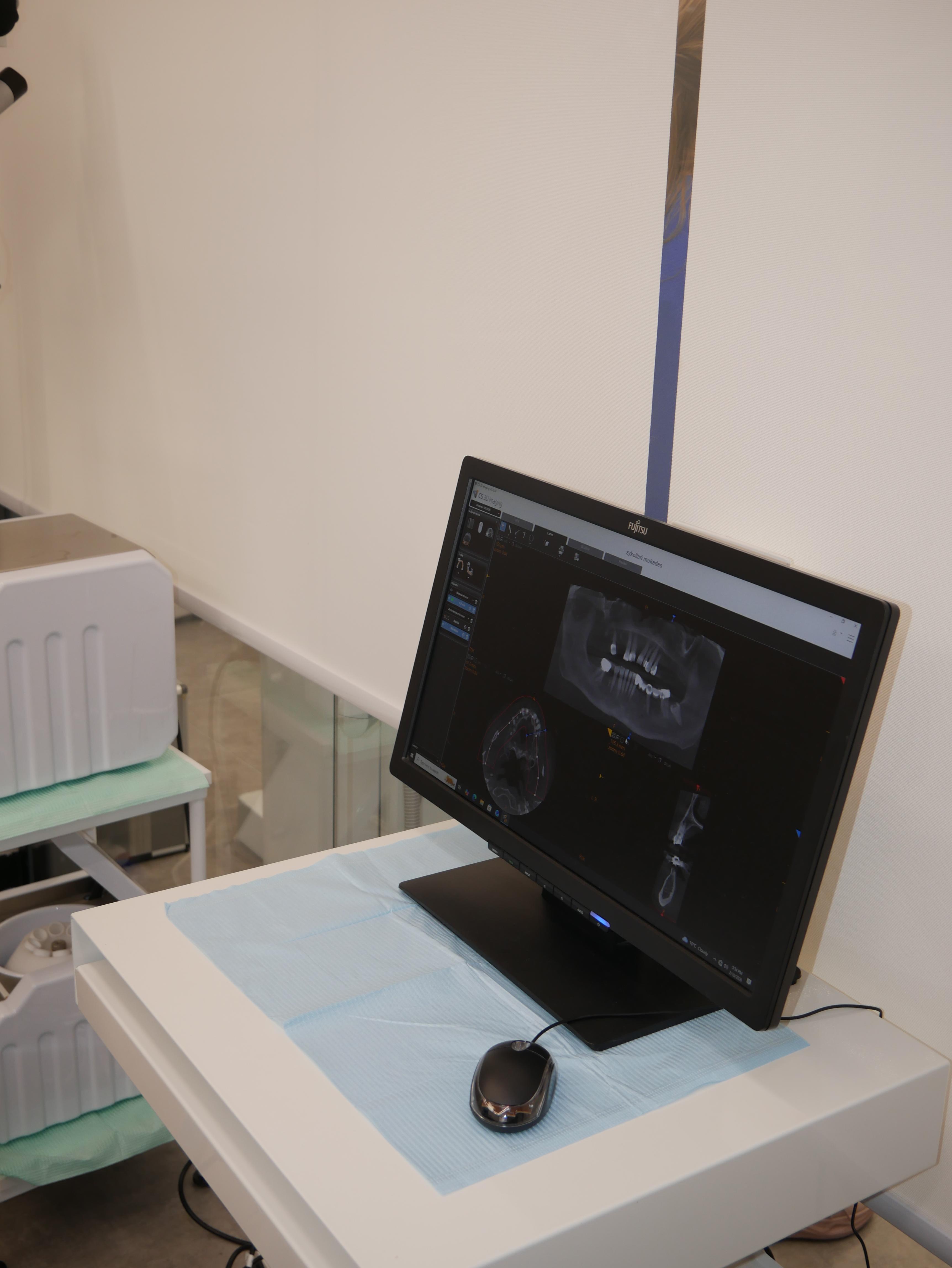
No treatment happens on day one. It is examination, X-rays, a 3D scan, a conversation about what you want, and a plan. Nothing is done to your teeth.
This matters for anxious patients: your first experience of the clinic involves no drill at all. By the time treatment begins the following day, the room and the people are already familiar.
About the pain
Straight answer: implant surgery and tooth preparation are done under local anaesthetic, and you should not feel pain during the procedure. Pressure and movement, yes. Pain, no — and if you do, that is what the stop signal is for.
Afterwards, expect soreness for a few days, the way you would after any minor surgery. Most patients manage on standard painkillers and describe it as considerably less bad than expected. You will be given specific aftercare instructions before you leave.
Anyone promising a completely sensation-free experience is overselling. Anyone suggesting you should expect to suffer is not describing modern practice.
The part people underestimate
The most common thing patients report is not relief about the dentistry. It is what changes afterwards.
People describe smiling in photographs for the first time in a decade. Not covering their mouth when they laugh. Eating in front of other people without planning around it. Several have said the hardest part was realising how much they had quietly given up.
That is worth weighing against a few uncomfortable days.
If you are still not sure
You do not have to decide now. You can ask questions for as long as you need — including the ones that feel silly. In our experience the "silly" questions are almost always the ones actually holding people back: will they judge me, will it hurt, what if I panic, can I stop.
We would much rather answer those over several weeks than have you book something you are not ready for.
Send us a message with whatever you are worried about. No pressure, no deposit, and you are welcome to say you are only looking for information.